

HERITAGE TRAIL
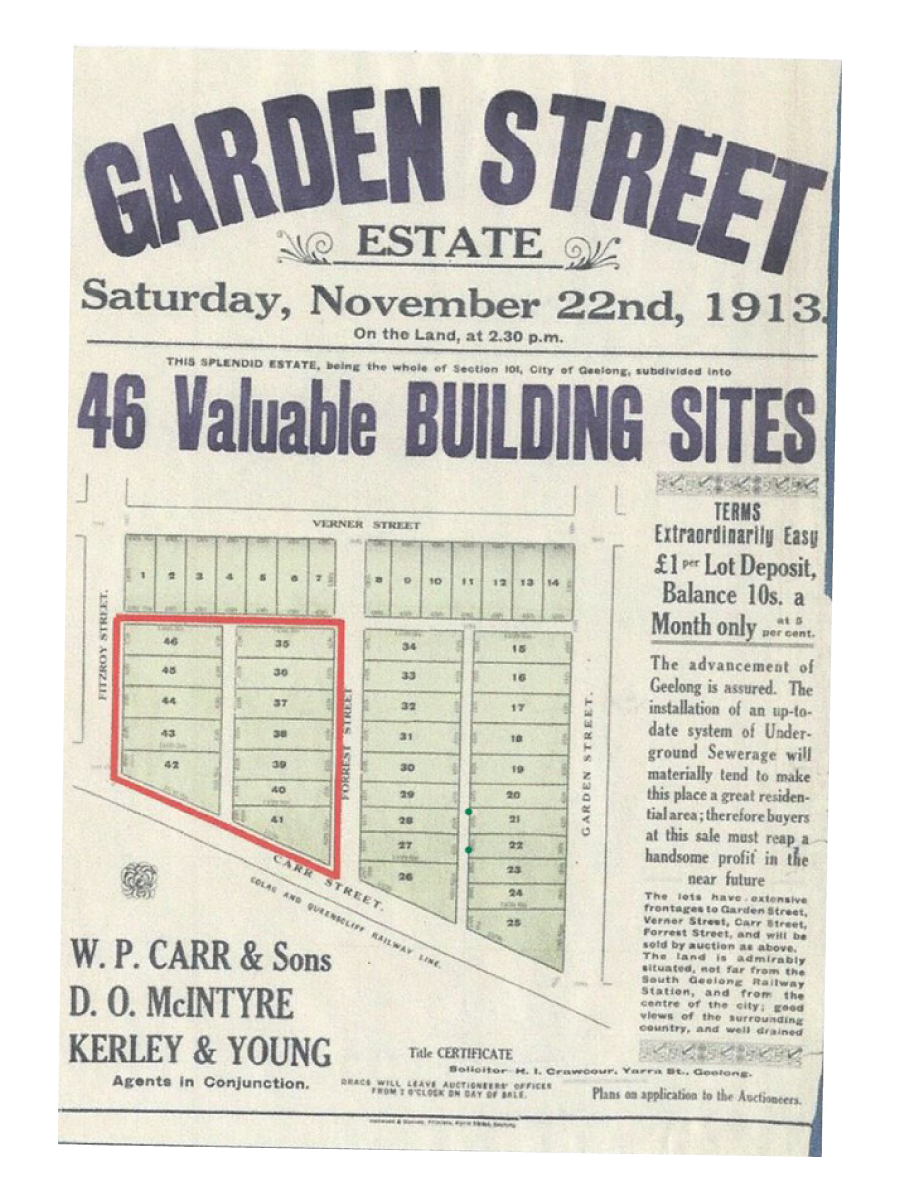
1913 sale plan showing housing lots for sale at Fitzroy,
Carr and Forrest Streets.
Source – Geelong Heritage Centre.
An Industrial Turn —
The Early Days of The Bottleworks Site
Despite its initial subdivision for residential development, the site’s industrial potential overtook original plans to include the site as part of the surrounding Garden Estate community (bounded by Fitzroy, Carr, Forrest and Verner Streets). A 1914 acquisition of the site by Bruce and McLure (agricultural implement and windmill manufacturers from Warrnambool) marked a pivotal shift in the site’s trajectory - from housing lots to an industrial hub.
The site was chosen because of its proximity to the South Geelong Railway Station, with the original Bruce and McLure business in Warrnambool thwarted by freight charges on materials.
While historical records do not confirm whether Bruce and McLure ever completed their planned factory, their purchase reflected the broader trend of Geelong's transformation into a key manufacturing centre in Victoria during the early 20th century. It also laid the groundwork for future industrial use of the site, setting the stage for its eventual reinvention into glass manufacturing, a wool storage site and furniture hub.
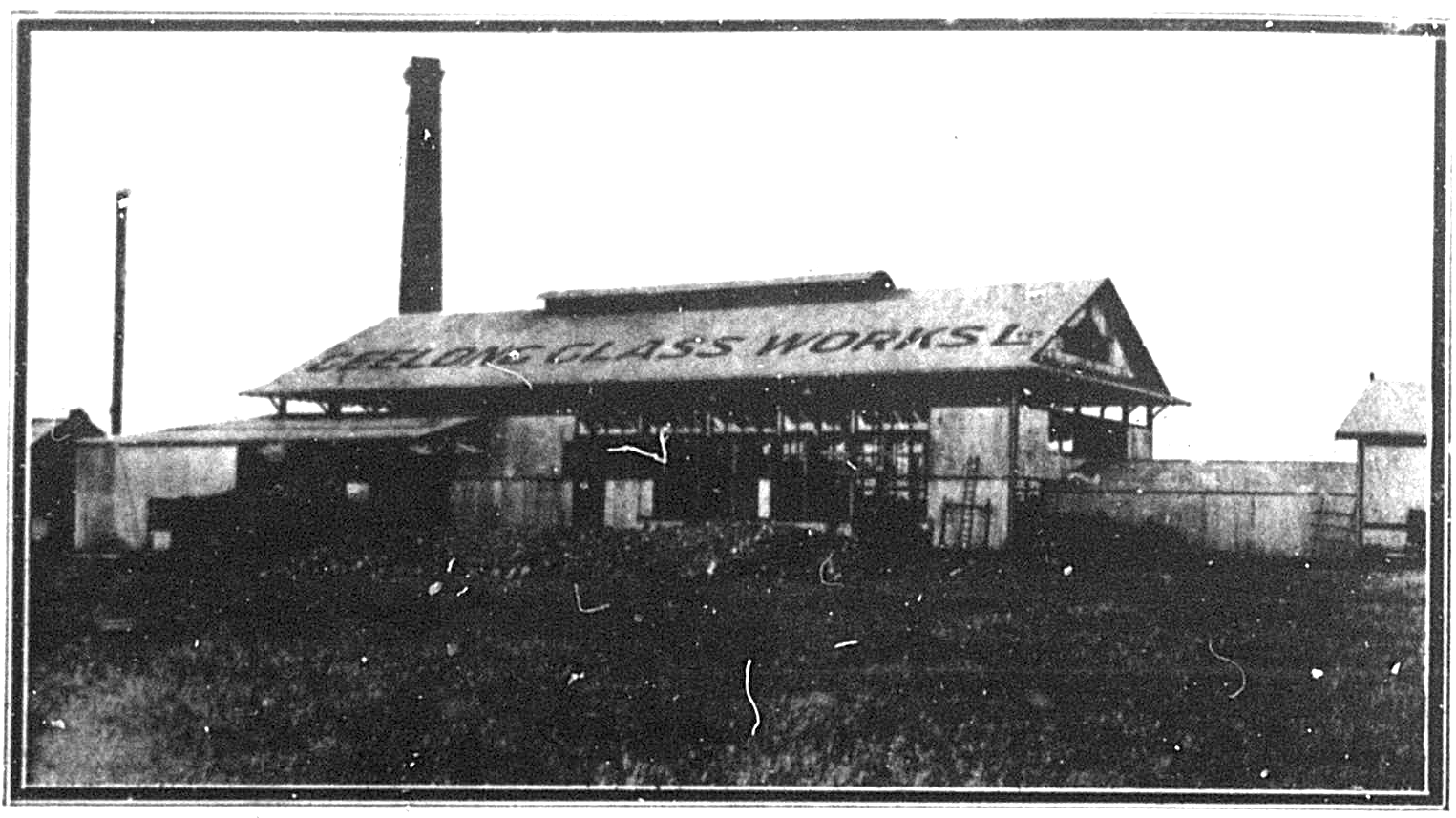
ABOVE: Description – an image of the historic double height factory building circa 1920s.
Source – News of the Week, 10 June 1920.
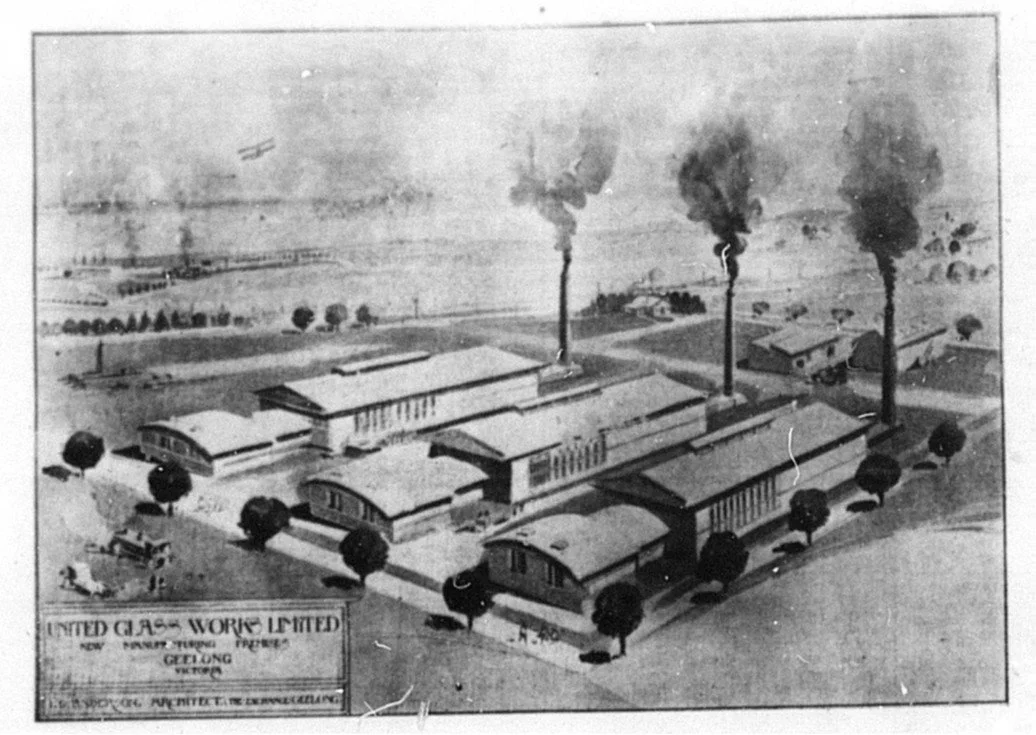
BELOW: Description - I.G. Anderson proposal for the site.
Source – News of the Week, 10 June 1920 (courtesy of David Rowe).
Geelong Glass Works —
An Industrial Landmark.
In 1920, The Bottleworks site was acquired by United Glassworks Ltd. Local architect Illiffe Gordon Anderson prepared plans for a glass manufacturing complex comprising 3 arched truss and gable buildings. Only one of the buildings was constructed – a double height factory building in its north-east corner.
Bold signage Geelong Glass Works Ltd waspainted prominently on the rooftop - once visible from the nearby railway, acting as both advertisement and landmark. This sign has been restored as part of redevelopment of the site.
The construction of the Geelong Glass Works factory marked an important chapter in the site’s industrial evolution, with the factory bringing new employment opportunities to South Geelong. Though its operational lifespan was relatively short, the Glass Works also played a pivotal role in the region’s early manufacturing economy, producing bottles and glassware to meet the demands of local breweries, soft drink companies, and food producers. Original bottles were recovered onsite, and have been used as light fittings in the ground floor lobby of The Bottleworks apartments. Returned to the same building that once was Geelong Glass Works Ltd.
Today, the surviving factory building stands not only as a physical remnant of the city's manufacturing past but also as a unique architectural legacy of 1920s industrial architecture. The factory, with its arched steel trusses and expansive gable roof, showcased a blend of functionality and notable architectural details unusual for industrial buildings of the period.
Architect I.G. Anderson also designed numerous retail buildings in the Geelong City centre and several notable examples of modern apartments and private homes in Melbourne.