
Heritage Trail
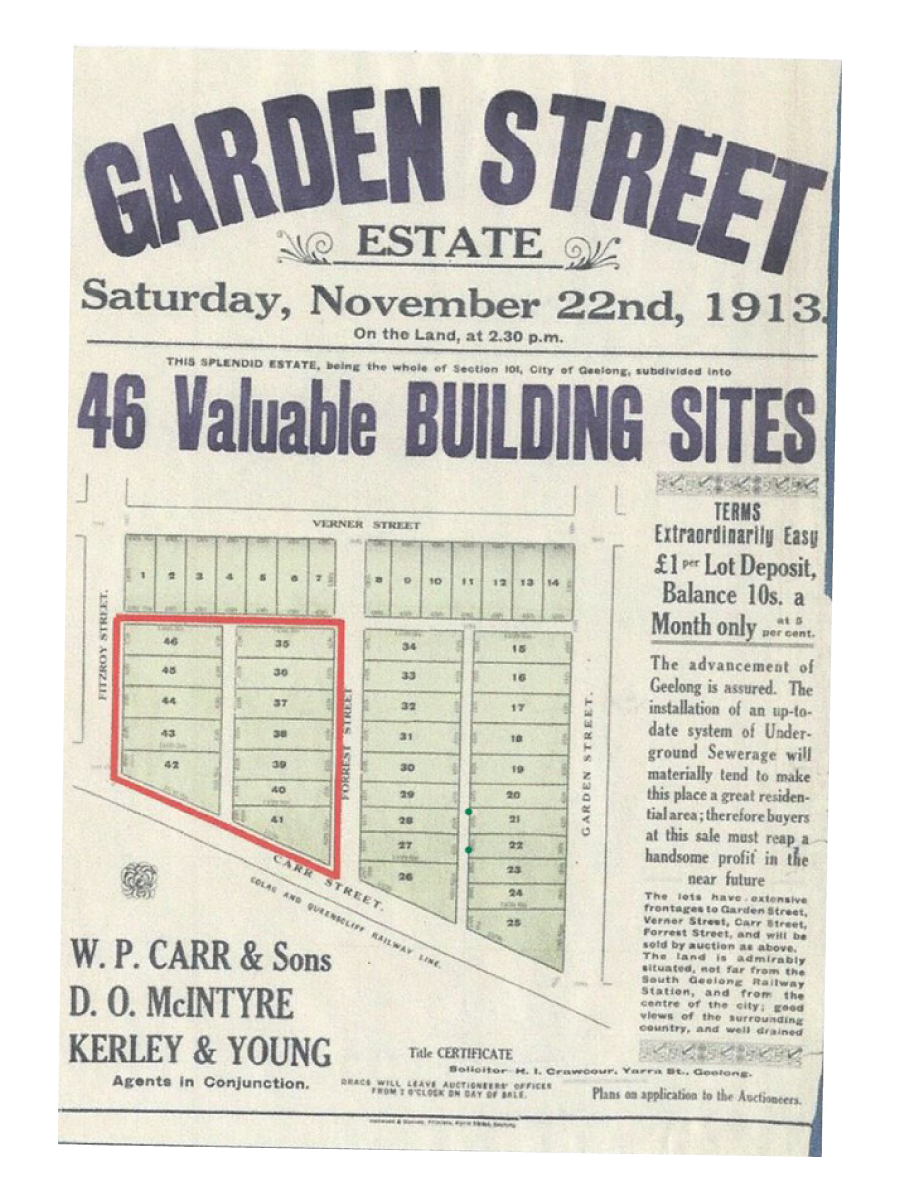
1913 sale plan showing housing lots for sale at Fitzroy,
Carr and Forrest Streets.
Source – Geelong Heritage Centre.
An Industrial Turn - The Early Days of The Bottleworks Site.
Despite its initial subdivision for residential development, the site’s industrial potential overtook original plans to include the site as part of the surrounding Garden Estate community (bounded by Fitzroy, Carr, Forrest and Verner Streets). A 1914 acquisition of the site by Bruce and McLure (agricultural implement and windmill manufacturers from Warrnambool) marked a pivotal shift in the site’s trajectory - from housing lots to an industrial hub.
The site was chosen because of its proximity to the South Geelong Railway Station, with the original Bruce and McLure business in Warrnambool thwarted by freight charges on materials.
While historical records do not confirm whether Bruce and McLure ever completed their planned factory, their purchase reflected the broader trend of Geelong's transformation into a key manufacturing centre in Victoria during the early 20th century. It also laid the groundwork for future industrial use of the site, setting the stage for its eventual reinvention into glass manufacturing, a wool storage site and furniture hub.
Geelong Glass Works – An Industrial Landmark.
In 1920, The Bottleworks site was acquired by United Glassworks Ltd. Local architect Illiffe Gordon Anderson prepared plans for a glass manufacturing complex comprising 3 arched truss and gable buildings. Only one of the buildings was constructed – a double height factory building in its north-east corner.
Bold signage Geelong Glass Works Ltd was painted prominently on the rooftop - once visible from the nearby railway, acting as both advertisement and landmark. This sign has been restored as part of redevelopment of the site.
The construction of the Geelong Glass Works factory marked an important chapter in the site’s industrial evolution, with the factory bringing new employment opportunities to South Geelong. Though its operational lifespan was relatively short, the Glass Works also played a pivotal role in the region’s early manufacturing economy, producing bottles and glassware to meet the demands of local breweries, soft drink companies, and food producers. Original bottles were recovered onsite, and have been used as light fittings in the ground floor lobby of The Bottleworks apartments. Returned to the same building that once was Geelong Glass Works Ltd.
Today, the surviving factory building stands not only as a physical remnant of the city's manufacturing past but also as a unique architectural legacy of 1920s industrial architecture. The factory, with its arched steel trusses and expansive gable roof, showcased a blend of functionality and notable architectural details unusual for industrial buildings of the period.
Architect I.G. Anderson also designed numerous retail buildings in the Geelong City centre and several notable examples of modern apartments and private homes in Melbourne.
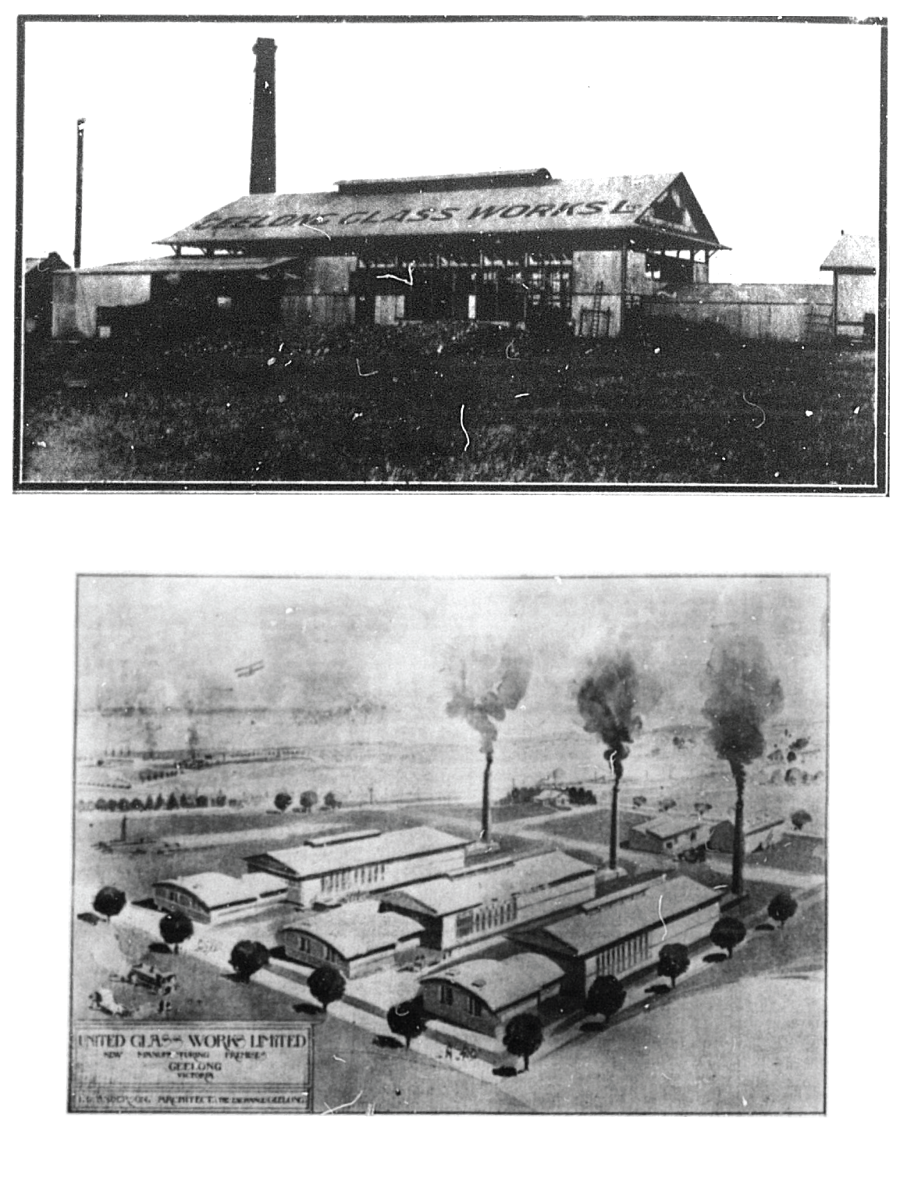
ABOVE: Description – an image of the historic double height factory building circa 1920s.
Source – News of the Week, 10 June 1920.
BELOW: Description - I.G. Anderson proposal for the site.
Source – News of the Week, 10 June 1920 (courtesy of David Rowe).
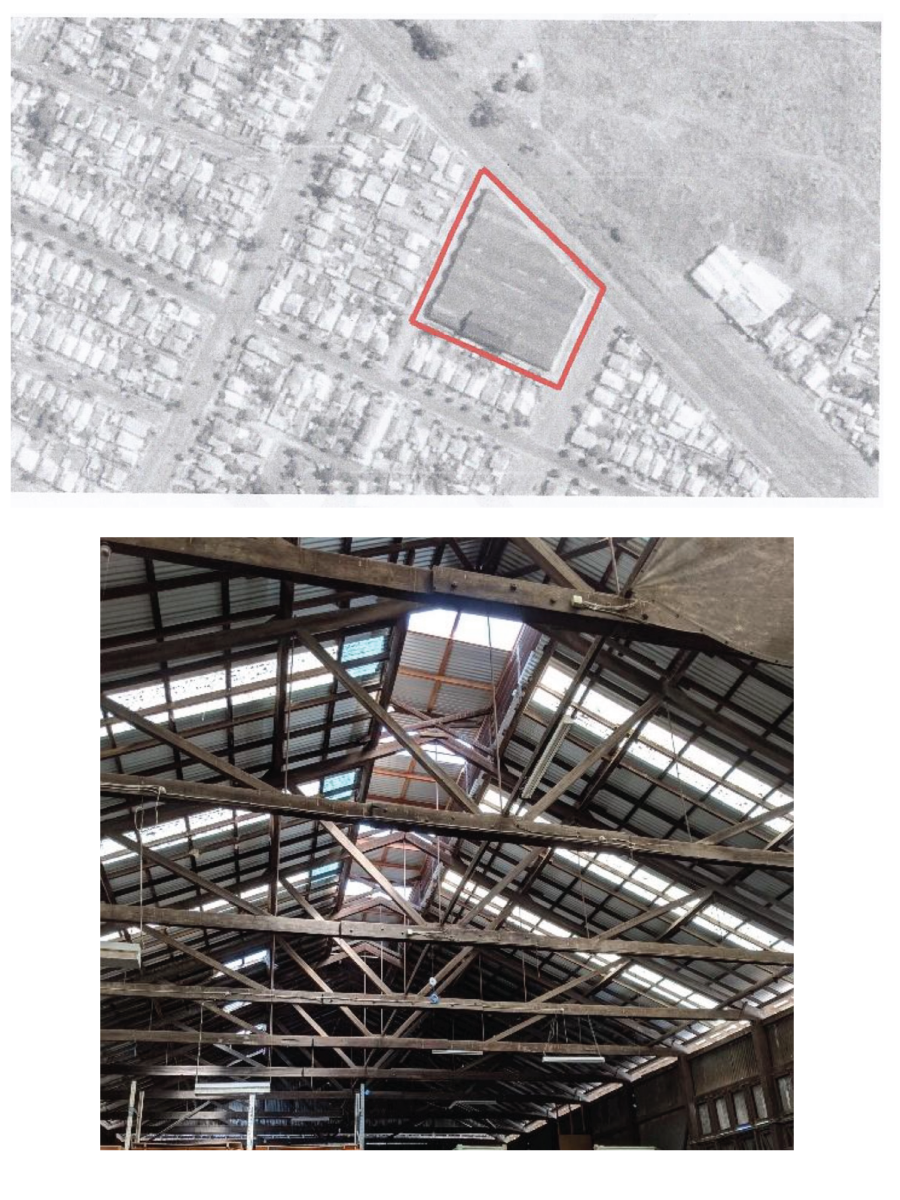
ABOVE: Description – aerial photograph taken in 1978 showing the site in its fully developed state.
Source – Land Victoria.
BELOW: Original beams been incorporated into the apartments design.
From Glass to Wool - A Site Transformed.
In late 1927, the site was acquired for use by Dennys Lascelles Ltd, a prominent local wool broking firm first established in 1857. The firm added to the site building several sheds along the site boundaries. These sheds were constructed progressively after 1938 and before 1952 for the purpose of storing an overflow of wool.
A distinctive feature of the wool sheds constructed during this period was the exposed timber beams bearing the etched names, initials, and dates of the many workers passing through the sheds. Hand-carved with pocketknives and pencils, these markings serve as a record of the generations of shearers, labourers, and warehouse hands working in Geelong’s booming wool industry.
The original timber beams have stood the test of time and will continue to hold the structure of the Geelong Glass Works Ltd building and be a historic feature in the ceilings of the first-floor apartments. Additionally, the original wooden floorboards have been saved, taken offsite to be re-milled and returned to be used as the apartment floorboards.
During World War II, it is thought that the sheds may have been utilised as emergency housing for American soldiers based at Queenscliff Fort.
Denny Lascelles continued to operate from its various sites in Geelong through the post-war period. It was acquired by New Zealand Loan & Mercantile Agency Co. in 1978 which was later acquired by Elders in 1981.
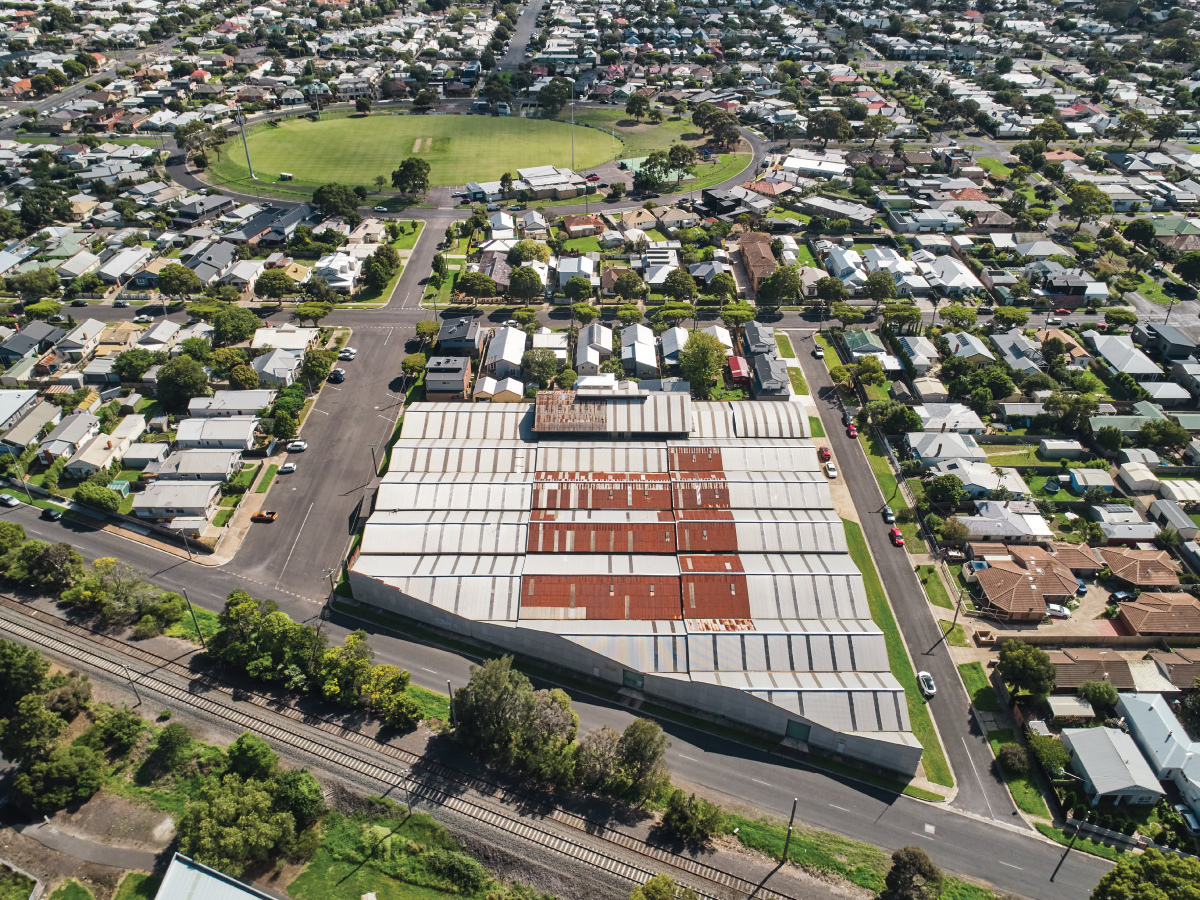
THE BIG SHED ERA – GEELONG’S TREASURE TROVE OF FURNITURE.
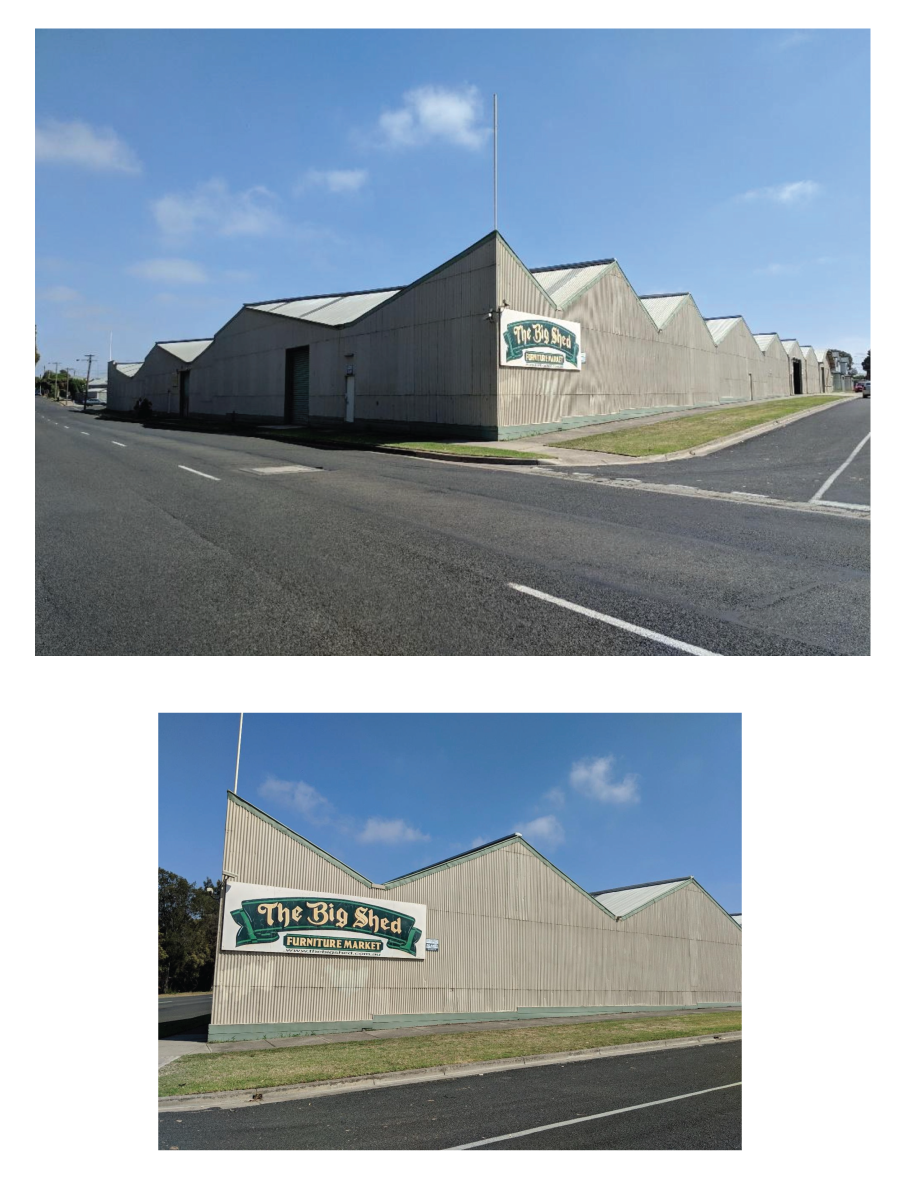
Since the early 1980s, The Bottleworks site was owned and operated by local businessman John Dillon and family as a furniture manufacturing and second-hand furniture retailer.
Over the years, The Big Shed became more than just a furniture store—it evolved into a local landmark and a cherished part of Geelong’s industrial and cultural landscape. Its vast interior, with towering ceilings and timber beams, housed an ever-changing collection of pre-loved furniture, antique curios, and handmade pieces. Shoppers from across the region would make weekend trips to browse the eclectic assortment, often leaving with a story as well as a bargain.
From Industry to Identity - The Bottleworks Returns to Its Residential Roots
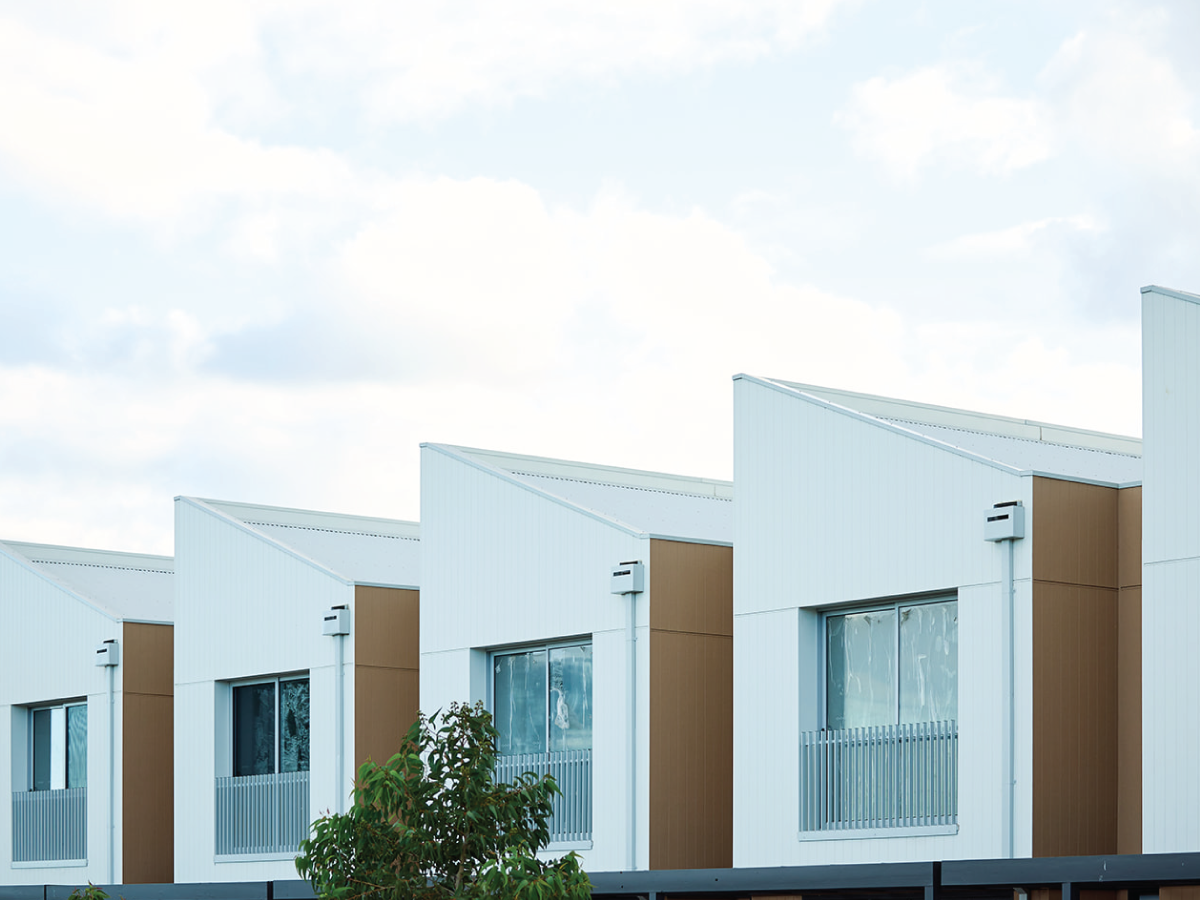
The redevelopment of the site as The Bottleworks marks the return to residential use for one of South Geelong’s largest industrial sites. Comprising a boutique collection of 33 townhomes and 7 apartments, The Botttleworks now bridges past and present—reimagining a site once central to local manufacturing as a contemporary place to live.
Designed by Chamberlain Architects and Interiors, The Bottleworks seeks to celebrate the site’s industrial past while contributing to the established residential character of the surrounding Garden Estate precinct. The result is a layered and considered contemporary design drawing inspiration from the asymmetrical geometry of the wool sheds and glass factory building that once defined the site.
The redevelopment brings to the fore the historic factory building hidden from view. Originally constructed in the 1920s for the Geelong Glass Works, the double-storey structure has been carefully preserved and reimagined. Its bold rooftop signage—Geelong Glass Works Ltd—has been reinstated, referencing the original plans by local architect Iliffe Gordon Anderson, whose early 20th-century work is well known.
Structural reinforcement to retain the heritage fabric of the building, whilst facilitating its repurposing to residential apartments was completed by boutique heritage restoration specialist Abode Restoration.
The wide eves and hipped roof, with timber and corrugated iron detail give unique character to each new apartment. The façade design reinforces the original proportions of the historic building, resulting in apartments with stunningly high ceilings, with the upper floor featuring timber beams from the origin of the building.
This sensitive adaptation preserves not just a structure, but a story—of innovation, industry, and the layered identity of Geelong’s urban fabric.